


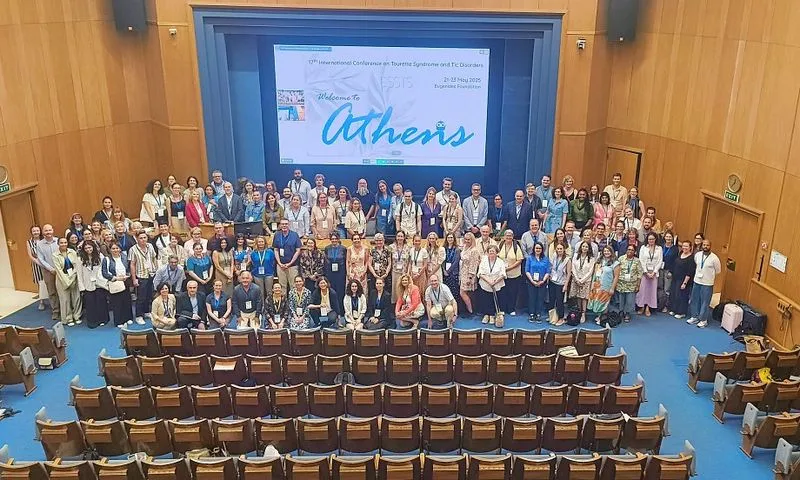
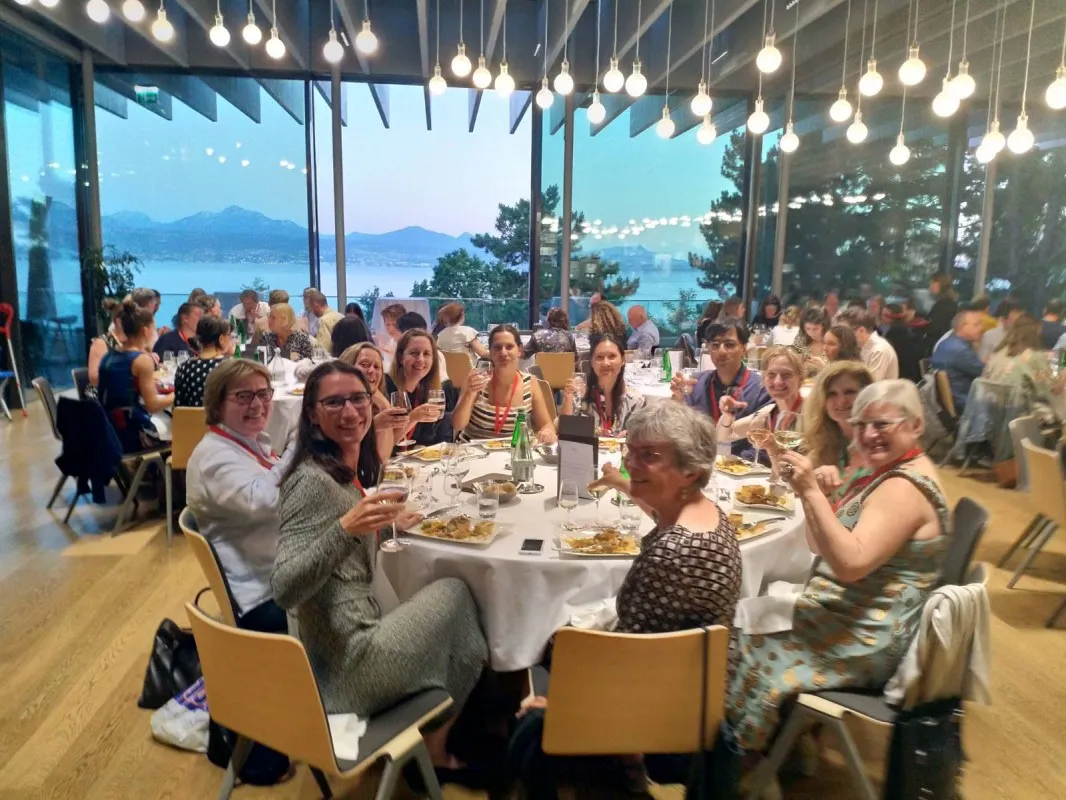
Strengthening ESSTS' annual congress, working groups, training programmes, and scientific outputs
ESSTS Partners
ESSTS is the world's only clinical and scientific society dedicated to Tourette syndrome and tic disorders. Our members —clinicians, researchers, and allied professionals— work across more than thirty countries, from Europe to the Americas, Australia, and beyond.
Partnering with ESSTS means supporting the global advancement of a field that affects around one percent of children and adults worldwide, and that remains under-recognised, under-researched, and often stigmatised.

Institutional Network
(Currently being updated)
Tics and neuro-developmental movements (TANDeM) service | Evelina London, UK

Birmingham Women's and Children's Hospital | Birmingham, UK
Tourette Syndrome Reference Centre, Pitié-Salpêtrière Hospital | Paris, France

Herlev Hospital | Herlev, Denmark
The Psychiatric Hospital. J. Babinski | Łódź, Poland

Department of Product and Systems Design Engineering, Polytechnic School of the University of the Aegean | Syros, Greece

Hannover Medical School, Tourette Working Group | Hannover, Germany

Institute of Mother and Child | Warsaw, Poland
Institute of Mother and Child Foundation | Warsaw, Poland
Eugenides Foundation | Athens, Greece
Tourette Syndrome Reference Centre | Paris, France

This is some text inside of a div block.

This is some text inside of a div block.
This is some text inside of a div block.

This is some text inside of a div block.
What partnership with ESSTS means
Partnerships with ESSTS support the Society's core mission: advancing scientific knowledge, clinical practice, professional education, and public understanding of Tourette syndrome.
This is broader than sponsoring a single event.
A partnership sustains the ongoing work that constitutes ESSTS as a functioning international society; our annual international congress, the TS-School for professionals, working groups producing clinical and scientific outputs, the webinar, podcast and communications work reaching families and professionals worldwide, and the community of researchers and clinicians we bring together across continents.
ESSTS has published the European clinical guidelines for Tourette syndrome and other tic disorders (first edition 2011, updated version 2.0 in 2022, with a further update under consideration) —the primary evidence-based reference for TS clinical practice across Europe and cited internationally. In 2022, the Society also developed the International clinical criteria for Functional Tic-Like Behaviours (FTLBs), a widely-used framework helping clinicians recognise and distinguish this condition from primary tic disorders.
We work with partners whose values and interests align with our mission, and we build relationships intended to endure —recognising that meaningful change in a specialist field takes years, not funding cycles.
Forms of partnership
ESSTS welcomes partnerships in a range of forms, tailored to the interests and capacities of each partner. These may include support for the Society's core institutional mission, contributions to specific programmes such as clinician bursaries and educational initiatives, named awards recognising outstanding contributions to the field, and collaborations around awareness, education, and community engagement.
Partnerships can be shaped around a specific project, theme, or geography —and we welcome conversations about forms not listed here.
Core mission support
Named Awards
Recognising outstanding contributions to the field of Tourette syndrome
Clinician Bursary Programme
Supporting participation in ESSTS meetings and educational programmes
Training for teachers and educators
Programmes, resources, and events supporting those working with children affected by TS
Public awareness
Content, campaigns, and outreach improving public understanding of Tourette syndrome
Staff training programmes*
Evidence-based training for large service providers
*A developing area of ESSTS' work is designing and delivering staff training for large service providers –organisations whose staff regularly encounter people with Tourette syndrome and other tic disorders. TS is often an invisible condition: a person may present as entirely well until a tic emerges, at which point staff without the right frame of reference may misread what they are seeing. Training gives frontline staff the tools to recognise tics, respond appropriately, and support the person in the moment. Airports, transport hubs, and other high-traffic public environments are contexts where this makes a meaningful difference to the lived experience of people with TS. ESSTS is currently expanding this work in partnership with interested organisations.
Scientific, clinical, and educational decisions remain with ESSTS' qualified membership and governance in all cases. This independence is essential to ESSTS' scientific integrity, and to the transparent, well-governed partnerships we build.
To explore a partnership with ESSTS, please write to us at partners@essts.org